Showing posts with label Internet. Show all posts

Monday, February 6, 2017

(The Big Disrupt) IoT: Schizophrenia


How do you ever get anything done?


How do we, as a society, ever get anything done?


Every ten seconds some kind of notification is demanding our attention. Emails from friends and colleagues, social media blips, timers, news updates, the list goes on forever. We are subjected to a constant barrage of digital noise.


And not just in one place.


We have phones, tablets, laptops, desktops and connected vehicles, just to name a few. There is never a moment when we are more than ten feet from a device that is connected to the internet. Not only is this a huge tax on our attention and the main culprit of what many call ‘shiny object syndrome’, it is also a huge risk to our personal data.


All day as we Tweet, post, reply, and consume, our data is passing through the airwaves on some kind of connection. Some of those connections are more secure than others, depending on the awareness and technical aptitude of the proprietor of a given wireless hotspot. However, by and large, the measures that are in place to secure our personal musings and private data are woefully inadequate.


The number of connected and mobile devices we use keeps increasing while the measures that protect us lag behind.

The next time you pick up a shiny new internet enabled gadget it is well worth asking how it may affect your privacy.

Friday, October 23, 2015

(The Big Disrupt) Ad Blocking: Why The Fate Of The Online Ad Industry Is In The Hands Of Publishers And Advertisers, Not Ad Blockers


All markets and industries are in some way inefficient and that’s a good thing to some extent as if all markets were efficient, the world, at least in an economic sense, would be nowhere near as dynamic as we know it.  There are very few industries as inefficient as the online ad industry and the singular phenomenon that shows just how inefficient it is is the rise of ad blocking. 

It’s quite hard to argue against the position that ad blocking would never exist if the online ad industry wasn’t so inefficient as if it was efficient the industry would surely have paid close attention to the widespread hate for their ads and responded by building better ads that weren’t as creepy and annoying as they are now but now they’re paying for their negligence.

However, the continued success of ad blockers rest solely on what publishers and advertisers do in response and no one knows this better than ad blockers. Ad blockers know full well that they could be put out of business rather quickly if publishers and advertisers found a way to make better ads that weren’t a pain in the neck but ad blockers also know that this isn’t going to happen anytime soon as the inefficiencies that allowed ad blockers to rise in popularity are still in place.

Publishers and advertisers response to ad blocking so far has signaled that they’re not aware that the future of the online ad industry is their hands and are acting like an industry with a boot its neck even though to some extent they have the upper hand. Publishers have gone as far banning their readers and advertisers have threatened to lawyer up and take ad blockers to court but neither approach will work as market inefficiencies are almost always exacerbated rather than addressed by bans and courtroom dates.

The hundreds of lawsuits and various anti-piracy initiatives the music industry unleashed upon free music sites like Napster and potential customers didn’t make a dent in solving the issue of music piracy, a better user experience provided by Apple’s iTunes and music streaming companies like Spotify did. If anything, bans and court dates have the effect of alienating customers (especially those who represent their future customer base) and emboldening companies exploiting market inefficiencies industries have failed to address for years.

This is the reason why Uber can get under the skin of regulators, taxi drivers, journalists and insurance providers in every country it operates in and still remain a quite popular service among its customers as neither party mentioned above have been able to tackle market inefficiencies in the taxi industry as effectively as Uber has and never will.


In sum, publishers and advertisers to a certain extent have forgotten who decides whether they win or lose and ad blockers have served as an unhealthy reminder and if they don’t find a way to make consuming content on the web a more pleasurable one, Publishers (especially) and advertisers will pay the price.

Saturday, November 22, 2014

(The Big Disrupt) Google: Is Google About To Change The Way Money Is Made On The Internet, Again?


Google is clearly looking to cash in on the general ambivalence the public has towards internet ads across the web with newly established Google Contributor  program which if successful will seriously change the way how most sites fund themselves.

Google's new "contributor" program provides access to an ad free internet on participating sites for small monthly contribution part of which will be paid to sites. While this sounds quite simple when explained, the ramification for this is huge if it works. It's a well established fact that most web users hate online advertising with a passion and with good reason as data and privacy issues associated with the web are largely driven by sites trying to increase ad revenues which most sites depend on. 


However, this all hinges on whether web users, like you and me, are prepared to pay for an ad free internet and more importantly web content itself and, so far, the answer has been a resounding no. If the answer was yes, Google would seriously reconsider their business model or go out of business, fast.  However, since most of us aren't prepared to pay for web content, we're stuck with individuals and companies that produce web content forever trying to second guess our every move because they need generate ad revenue to support themselves.

Google has grown fat and rich because most web content is not paid for by people who consume it the most which makes it even harder to understand why the Silicon Valley giant wants to rock the boat. However with little sober reflection, it looks like Google are trying to do what Comcast are doing: get paid twice for same service. The only difference between what Comcast and Google is doing that Comcast is doing will change the internet as we know it, Google's plan however will change how 1) how it's consumed and 2) sites support themselves which ,in my opinion, is not the worst outcome.

While this wouldn't be the worst outcome on the whole for the internet, it would make ad agencies heads explode in unison as an ad free net is their worst and if Google's contributor system works out, the online ad industry will get a rude awakening. 

In Sum, Google, like sites across the web, are looking for ways to pay for content other than ads but unlike Google, not all stakeholders in this attempt will benefit either way.

Saturday, June 28, 2014

(Movies) The Internet's Own Boy: Hot Docs Q&A with Director Brian Knappenberger


Director Brian Knappenberger Talks about his new film "The Internet's Own Boy", at Hot Docs Q&A 


Monday, May 19, 2014

(TV) Net Neutrality: The end of the internet as we know it?


There has been much said about net neutrality and the consequences of its disappearance or death but one thing is for sure, it could spell the end of the internet as you know it.


Net Neutrality, a rather simple principle that would see all internet traffic, regardless of size or type, to be treated equally without discrimination is now in doubt as the FCC recently announced rules that would in practice allow internet service providers (ISP's) to charge internet companies for traffic they use


However, for all the furore over the end of net neutrality and the consequences of it's doom, the real story is the burgeoning war between ISP's and giant internet companies  that has been brewing for nearly a decade and now with the impending doom of net neutrality has already been won by ISP giants such as Comcast and Verizon.


ISP's have always resented the idea of net neutrality as they thought it made a etho-political issue out of what, according to them, was a simple traffic management issue. Sick of sites like Netflix and YouTube profiting while making up most of their traffic and being unable to charge for their extra use of their networks, ISP's have been looking for a remedy against net neutrality for years and now may just have found it.  


Caught between playing ball with cable giants such as Comcast and Verizon and fighting back against the new rules, internet giants such as Netflix and Google are looking to make use of the public outrage generated by doom of Net Neutrality and it's consequences for the internet by launching an almighty PR campaign rivaling the outcry that beat back SOPA. While Google and Netflix have a stake preserving net neutrality,  so does everybody else as the one of the main concerns of its loss means a handful of ISP's, thanks to the notable lack of competition in the broadband market, will have a terrifying amount of control over the cost and speed of access to the internet.

The loss of net neutrality would screw a lot of people from large internet companies to consumers but among all these parties new internet companies looking to become the next Google, YouTube, or Netflix stand to get screwed the hardest. 

Large internet companies such as Google and Netflix may fight against the nasty bump in their monthly broadband bills they will experience with the death of net neutrality but inadvertently may benefit from it's death as it may kill off potential competitors in their cribs. new internet start-ups, lacking both Google's and Netflix's brand recognition and cash,  will have to bend the knee and fork up large amounts of cash to large ISP's just to do business and compete just because large ISP's are looking to get paid twice.

Needless to say, this scenario can and will stifle innovation all because large ISP's  are engaging in what has to be one of the most blatant cases of industrial level rent seeking this side of twenty first century.  However, what's scary about this all is not that net neutrality maybe dead and its soon to be felt consequences but the entrenched power a ridiculously few cable companies have amassed and will continue to amass thanks to a number of strategic mergers and acquisitions that will only become more concentrated should Comcast complete their merger with Time Warner.

In sum, the death of net neutrality is a major loss for established internet companies and consumers and may bring the end of the internet as we know it but the real story at the heart of this travesty is the concentrated power a handful of ISP's have which can and almost certainly will be bad news for all involved. 

Tuesday, November 26, 2013

(TV) Smart TV: No Longer The Idiot Box


Fiction again and again has warned us about the folly of giving inanimate objects a brain, the ability to feel or any other element of the human experience, a warning LG have clearly failed to heed by making a TV smarter than its viewers.

LG clearly have underestimated the reaction of TV watchers finding out that their TV can watch them right back when one of its customers realized his TV was watching him and taking notes of his viewing habits.

Jason Huntley, an IT Consultant and writer of doctorbeets blog, wrote a blog detailing how he managed to piece together that his TV was collecting data on him through getting his hands on a incriminating corporate video (now suspiciously "under maintenance") selling the effectiveness of their ads system in tracking the preferences of their customers

While LG may throw out the defense that they created a TV that could provide a better service if it could record the viewing patterns of users and suggest content they might like based on the data of previous viewings, they fail to realize people don't like being stalked on the internet by ads and spam bots so they definitely won't be pleased that an household appliance has been tracking their every move as soon as they push the on button.

No one is against household appliances getting better or smarter but it is particularly concerning when they exhibit behaviors of a stalker a little to eager to please. In an age where privacy is almost non-existent ( it's not all Google or Facebook's fault, check your multiple social media accounts for proof) you would think one reprieve would be watching TV where you can watch your favorite shows in peace but now with the onset of smart  TV's that record every click of your remote, being a member of the most monitored human beings in the history of the species has literally hit home.      

It's only going to get worse as the are going to drop in price and become available to more people exemplified by high street electronics retailer Currys cutting £300 off  "selected Samsung Smart TV's".  In sum, Smart TV's maybe the future of television but Jason Huntley's  discovery is a consequence that maybe all too familiar in the coming years.

Wednesday, April 24, 2013

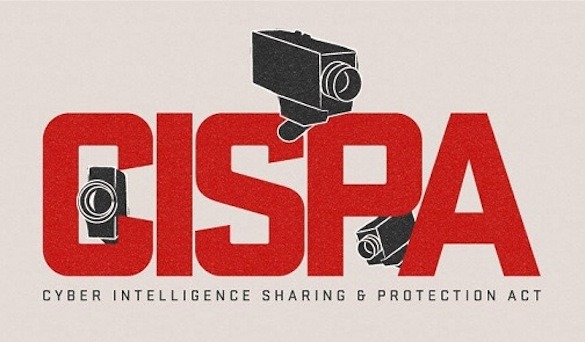
(Politics) CISPA: Passed Through House; Stagnant in Senate

http://25.media.tumblr.com/b2bff48ad84cb9eaabbbf908ca6dac27/tumblr_mlgqxlG0hk1r6m2leo1_1280.jpg 


The United States’ population has been abuzz the past couple weeks with extraordinary anomalies that have taken place across the country. The Texas fertilizer accident and the Boston bombings are but two of these incidents that have so captivated the national spotlight. Even still, Washington D.C. has been busy on their own front, as the controversial cyber security bill known as CISPA (The Cyber Intelligence Sharing and Protection Act) passed through the House of Representatives, last Thursday, with general ease, garnering a 288-127 vote count from the floor.

Nevertheless, increased opposition has been accruing since the bills proposal: resistance from privacy advocates, civil liberty groups, and even the White House –as President Obama has threatened an executive veto –has taken a mighty stand against the cyber security bill through various mean of communication. But what exactly is CISPA, and why should anyone care?

It seems that the bill has much support, despite the aforementioned opponents, from businesses that are struggling to fend off foreign hackers across Europe and Asia. The reason being is that many of these rogue hackers are able to cripple business infrastructure in the United States, notwithstanding being thousands of miles away from the actual corporations. Such attacks have lead to a demand for more protection for businesses and more repercussions for security breeches from international hackers.

Those opposed to the bill, however, are not buying it. Many object on the grounds that it would give entirely too much power into the hands of the Federal Government, namely, the NSA (National Security Agency). Essentially, it would be a free pass into whatever information needs analyzing from any business in the United States, even if the data is stored on private computers.

Michelle Richardson, an ACLU legislative councilwoman, argues: “"Cybersecurity can be done without sacrificing Americans' privacy online.” In fact, grassroot campaigns have been gathering widespread support from the laymen throughout America as well; for instance, many rallied behind CISPA Blackout Day (4/23) in protest to the Bill. Despite the apparent infringements of the fourth Amendment, lobbyists are fueling away in support of CISPA, as nearly eighty-four million dollars have been spent in favor of getting the bill through Congress. All the same, the bill, since being passed through the House last week, has been floundering in the Senate by their apparent disinterest on the account of being too busy.

It seems, to conclude, that it is the citizens right to their own privacy as guaranteed in the Bill of Rights, namely, the Fourth Amendment. Albeit support has pushed CISPA through one leg of Congress already, it seems such support is only maintained by lots of bribes, lobbyists, and backdoor deals. Its future cannot be stated for sure; however, if it does proceed forthwith through the Senate, President Obama still has a chance to veto the bill, which he has already hinted he would do if upon occasion the bill made it successfully to his desk.

The full version of CISPA as passed through the House can be read here:


Brent McCulley on Twitter // http://twitter.com/brentthewalrus
 

LinkWithin

Related Posts Plugin for WordPress, Blogger...