Showing posts with label NSA. Show all posts

Tuesday, September 8, 2020

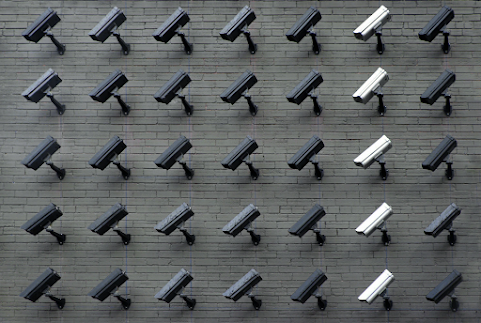
(The Big Disrupt) The Age of Mass Surveillance: Examining the use of Facial Recognition


A few decades ago, facial recognition technology only existed in science fiction. However, rapid advances in technology have fuelled the proliferation of facial recognition technology in recent years. The technology measures and analyzes people’s faces and compares it to images in their database. 

Today, the technology is prevalent in a wide range of commercial contexts and is rapidly expanding into new areas of our private and public lives. At this rate, facial detection technology will soon be a common aspect of our daily lives. 

Facial recognition has a myriad of use cases in a wide range of settings. In business, face detection tech is proving useful in identifying the unique characteristics of customers in retail marketing and advertising. In law enforcement, government agencies in different parts of the world are leveraging the power of facial recognition technology to aid their efforts in combating crime and terrorism. But despite its benefits, face analysis tech carries a certain degree of risk. 


The Good


At its core, facial recognition is a technology used to analyze faces for the purpose of identification or verification. Due to its potential benefits, facial recognition tech has become an area of significant interest for governments and private entities. Here are the considerable benefits of facial recognition technology. 


  • Security. In terms of security, facial recognition technology can help police identify criminal elements, ensure safety in public spaces, and general maintenance of law and order. Face detection tech also helps police prevent human trafficking and find missing children. 


  • Medicine. Facial recognition technology can be used to identify genetic disorders with a facial scan. This is possible because some genetic disorders come with a facial trait. For instance, facial recognition tech has been shown to detect DiGeorge syndrome with a 96.6 percent success rate. 


  • Marketing. Marketing firms often consider factors such as ethnicity, age, and gender when creating products or services for their customers. Marketers can use facial recognition technology to define their audiences with a high level of accuracy. 


The Bad


As stated earlier, facial recognition technology has a dark side. Facial recognition technology protests focus on the following concerns. 


  • Violation of Freedom and Privacy. Facial recognition tech gives government agencies the power to single out individuals in public spaces and track them. Our movements are no longer private. This is tantamount to the violation of our basic freedoms. In fact, privacy is one of the major concerns of people protesting against the use of facial recognition


  • Safety. This technology also has the potential of being misused in stalking and online harassment. It gives perpetrators the ability to use a picture of their victim to find out every little detail about them, including their home address or place of work. This threatens our personal privacy as well as safety. 


  • Mistaken Identity. Facial recognition systems are not 100% accurate. In fact, they are far from it. Studies have shown that facial recognition algorithms tend to misidentify racial minorities. In law enforcement, mistaken identity can easily lead to a wrongful conviction.


Facial recognition technology can be dangerous. With retailers, social media platforms, smartphone manufacturers, and federal authorities employing the technology, facial recognition has become more pervasive and even more concerning. The good news is that there are steps you can take to protect yourself from this intrusion. 


How to Protect Yourself


Nobody is safe from facial recognition technology. Since we can’t hide in our houses forever, we can wear anti-facial recognition glasses and masks to conceal our faces partially. But the threat of surveillance exists online on social media sites such as Facebook. You can stop the social media giant from tracking you by opting out of its facial recognition system. You can also use a VPN to protect your privacy online. A Virtual Private Network (VPN) will encrypt your connection, making it impossible for someone to spy on your online activities. 


The positive side of facial recognition technology is indisputable. However, we cannot ignore the potential drawbacks. For starters, the surveillance capabilities of facial recognition technology allow the government to identify and track people in public, often without their knowledge or consent. The accuracy of facial recognition systems is also questionable and puts lives in danger, especially when facial recognition technology is used in law enforcement. 


Wednesday, July 27, 2016

(The Big Disrupt) Mass Surveillance: Why the golden age of surveillance is set to continue no matter who wins in November


If there has ever been an election that has vindicated the concerns and criticisms of every thinker from Plato onwards about democracy, it would be this one fought by Hillary and Donald Trump. 

Both candidates are highly divisive figures in the public eye and even more so in their own parties as Clinton is seen as a figurehead of the democratic party establishment by its liberal base and Trump draws the ire of his own party's establishment as the billionaire revels in his outsider status. 

Trump eerily mirrors a character Plato describes that could turn a democracy into a tyrannical state and seems to provide a terrifyingly accurate characterization of much of his support who are largely voting for the man rather than his policies which, so far, have not been articulated at any length beyond the phrases "build a wall", "were gonna win again and win big", and last but not least "make America great again". 

While Clinton is a far cry from Plato's conception of who should rule, she is by far the most accomplished of the two as a former senator and secretary of state, a quality Plato would approve. The thought of Plato can provide insights today but his great mind unfortunately doesn't provide into a slightly more complex issue over who should lead, privacy. 

We would have look to more contemporary thinkers with minds no less gifted than Plato's but, on the whole, the thoughts of great minds so matter little in an age where our relationship to privacy is ephemeral at best, easy to deny, and ceded almost reflexively. In an age like this, is it a surprise that possibly the most hawkish proponents of mass surveillance our vying for the highest office? 

Our relationship to privacy however has been hampered severely by a spike in terrorist attacks kicked off by the harrowing 9/11 attacks which swung the balance between security and liberty firmly in the favour of the former. To this day, leaders still make fear based arguments when arguing about impinging our right privacy and with the recent spate of attacks across the globe, these arguments have intensified and have largely helped to set the poisonous tone and mood surrounding this election cycle.       

Both Clinton and Trump have been strident to say the least about their intentions to  continue mass surveillance programs should they become president especially in response to terrorist attacks. 

In response to the Brussels attacks, Clinton expressed in an CNN interview that to avoid similar attacks happening in the U.S., there would be the need to increase surveillance capabilities as well as a greater police presence  on the ground. While these may seem like common sense proposal in the face of an attack, Clinton's prescription seems glaze over the fact that mass surveillance is at an all time high and yet attacks are happening at a greater level of frequency. 

Trump, on the other hand, has taken his desire to surveill U.S citizens to a level that has drawn criticism. Back in November, Trump voiced his desire at a rally to track Muslims and surveillance on mosques  and also to build a database on members of the faith which has drawn unfavorable comparisons by opponents to what Nazis did to Jews.   

Trump also publicly stated that he lands firmly on the side of security in the classic liberty v security debate and while Clinton hasn't made statements as strong as Trump's regarding where she stands on the debate, it's quite clear where they stand. Why they favor security over privacy could be simply because the security argument is more convincing. A more complex reflection might be to consider the rather fleeting relationship both Trump and Clinton have with privacy. Both Clinton and Trump have been in the public eye for decades and have had everything from their personality, dress hairstyles, pitch, parenting skills and business and political failures scrutinized and laid bare for all to see.  

With this mind, it would seem common sense to presume that both candidates would value highly what much of their adult lives have lacked and would seek to preserve as much as they could for their fellow citizens. However, it seemed their experience has taught them that privacy is the most abstract constitutional right of them all, so abstract it may not exist at all. 

It would be hard to blame two very public figures to subscribe to the "privacy is dead argument" which  gained currency in  post 9/11 and has become a mainstream point of view since the Snowden leaks. Their complicated relationship to privacy can also explain why Donald Trump wished he could have voted for the controversial patriot act and Hiliary Clinton voted for it twice. 

In any case, Clinton's and Trump's relationship with privacy may not matter as it would prove rather difficult for any president to roll back the unprecedented level of surveillance since whether they're favour the fourth amendment or not. Any president willing to take on powerful agencies such as NSA, CIA and FBI would have to display a level of political courage that's scarce  in today's political class, never mind Clinton or Trump. 

In sum, whatever happens in November, you can expect from at least then to the next presidential election cycle that you're privacy is no less private than it was before as two very polarizing figures with a complicated relationship with privacy are look set complicate our relationship to privacy as much as decades in the public eye has theirs. 


Saturday, June 28, 2014

(Movies) The Internet's Own Boy: Hot Docs Q&A with Director Brian Knappenberger


Director Brian Knappenberger Talks about his new film "The Internet's Own Boy", at Hot Docs Q&A 


Monday, December 30, 2013

(What's Dope?) Terms and Conditions May Apply: A Sobering Look At Privacy (or the lack of it) in the US


Terms and Conditions May Apply is a very interesting film as it is very deceptive but in a insightful and sobering way as it opens with an innocuous act we all overlook when we sign up to use a service online but after watching this, we should become avid readers of the terms and conditions page before we mindlessly sign up to them. Most of our total ignorance comes from our trust of companies such as Google and Facebook to the point that we treat them we treat them like public goods instead of what they are, faceless corporations looking to make a buck by way of a profit.

These services are free and nobody is against these services being free but a problem presents itself when we are faced with the reality, as Terms and conditions May Apply shows, that if companies such as Facebook and Twitter aren't after your money, they're after something a lot more valuable and precious, your right to privacy. If we were to take this view, then the Terms of service agreements which may read like tax code but are essential reading if you value not having your privacy breached on a daily basis.   


The film then goes from the cumbersome topic of the terms of service agreement we all ignore when using a service online to the wider issue of the continual dissolution of  fourth amendment and persistent violation of privacy in general across the globe. The film also delves into the industries such as the surveillance technology industry that have benefited from the anti privacy climate in the US since 9/11 and the privacy denying policies that have become law since, the still controversial Patriot Act (2001) a prime example. The about face turn in the narrative was a little disorienting simply because I wasn't expecting the film to look at the wider political context.

What I like most about Terms and Conditions May Apply is that it doesn't let companies such as Facebook and Twitter off the hook regarding their role in the persistent violation  of the privacy rights of their users. The film is especially tough on Facebook and Google from its Privacy policies which have very little to do with privacy and their rather lousy treatment of the data of their users from warehousing data to allowing third parties (i.e. governments, spy agencies) access it.

I also like how it reveals the industrial strength hypocrisy of the heads of both Facebook and Google as the film does a great job of showing both Eric Schmidt and Mark Zuckerberg's indifference or outright disregard of the privacy rights of their users stressing the desire for a more "open society" but publicly state their anger (or blacklist magazines in Schmidt's case) when their privacy is breached pretty much how their respective companies the privacy of users on a daily basis.


My favourite moment of the film is when Cullen Hoback, director of the feature, tracks down Mark Zuckerberg to his home address and basically ambushes the Facebook CEO with the camera rolling as he walks hastily down the street doing his best to shake Hoback off his tail then stops to ask him Hoback to turn the cameras off.

This may seem unfair and a gross but entertaining breach of Zuckerberg's privacy but as Hoback spends the whole film demonstrating, tracking down Zuckerberg and getting in his face about his constant interview dodging is nothing in comparison to his companies rather disheartening practices regarding to the privacy of their users.  

All in all, Terms and Conditions May Apply is as dope a film about the state of privacy online and beyond you can get and if you don't watch this film and don't look at Google and Facebook in a different light, nothing ever will.

Check out the trailer Terms and Conditions May Apply trailer here

You can also the film's site here


Sunday, June 9, 2013

(Politics) Why Government Privacy Breaches Have Very Little To Do With Privacy


While most Americans may experience shock and anger upon reading news stories that inform them of the extent that their fourth amendment rights have become obsolete, it would confirmed what more informed parties among the American populous have been witnessing for 12 years and even longer. For all the breaches of the fourth amendment under the Bush Administration and the Obama rhetoric promising his regime will avoid following suit, the Obama Administration  not unlike many other issues, has largely continued and even escalated policies started under the Bush administration to the point that it has become a fair question to ask whether the president is at the helm of a car or express train.

The president has stood up and defended the mass data collection of millions of his fellow citizens and argued its legality which must gall constitutional law professors across the nation that one of their own is actually arguing in favor of one of the biggest fourth amendment breaches ever.

However, what makes the recent stories in the press detailing privacy breaches by the executive branch so interesting is not the breaches of the fourth amendment, as it should be, but the ongoing struggle and debate over where executive power begins and corporate power ends as the reality is that there is no beginning or end to both as the split is arbitrary and metaphorical.  

The Obama administration has been clearly demanding that corporations (most of them in the tech field) should give their vast store of data for analysis and many, despite some denying such actions, have cooperated and in the case of Verizon, have been forced by secret court orders to give up information of their customers. Many in the press have been arguing that these companies should put the privacy of their customers before anything else but what they don't seem to realize is that despite the talk of corporate power, corporations have to acquiesce when the state asserts itself.

In sum, for the last two to three decades, we have often heard of  the diffusion of power or the end of the state power which has been true for the most part with regards many issues but as last week showed, not where it counts.

Thursday, June 6, 2013

(Politics) NSA: NSA spying just one in a string of nails in the coffin of the fourth amendment


The Fourth Amendment has been on the ropes since 9/11 and the passing of the Patriot act so there should be  no shock for Americans when greeted with news that the National Security Agency (NSA) has been monitoring their phone calls  “on an “ongoing and daily basis”[1]. While this should not surprise most observers of US domestic surveillance policy for the last 12 years, it is surely another nail in the coffin of the fourth amendment and undermines the concept of the rule of law as “the communication records of millions of US citizens are being collected indiscriminately and in bulk – regardless of whether they are suspected of any wrongdoing”[2].

Thanks to a secret court order, the FBI was allowed access to the phone records of US citizens via Verizon that will detail the numbers of the caller and recipient, when and where it took place and how long the call lasted[3]. The numerous breaches of fourth amendments that grants  US citizens the right of privacy has clearly been the strategy of the US government as it has been the policy of two consecutive administrations to keep too close an eye on the communications and movements of  its citizens.

The NSA have been keeping a close eye on the communications of US citizen for the last twelve years without much in the way of due process or court warrants and now according to the ACLU, daily  “intercepts and stores 1.7 billion emails, phone calls, texts, and other electronic communications”[4].  It is also a monster of an organization dwarfing the size of the CIA and         FBI combined[5]. However, despite its power and size to snoop on US citizens, it hasn’t done it without help.

Congress has helped shape the conditions in which this story is possible as it rubber stamped the passing the still controversial 2001 patriot act and more importantly to the context of this story, the amendments to FISA in 2008 which weakened judicial oversight[6]. A number of corporations have played their part including AT&T who had cooperated with the NSA in letting the agency access the records of their customers[7].

The Obama administration is clearly moving away from the fourth amendment telling from its recent appointments of former bush era appointees who were in favour of many of the violation that took place during his regime.   Former Bush era deputy attorney general now shoe in for the position of director of the FBI, was at the heart of one the number of scandals during the Bush administration  regarding the fourth amendment when it was revealed that the NSA, ordered by the president, were spying on Americans without judicial oversight[8].

In sum, the NSA’s further usurpation of power to spy on US citizen is odious to witness as it undermines the fourth amendment and the concept of the rule of law. Its actions have been helped by successive administration looking to monitor the communications and movements of US citizens and thanks to a largely pliant congress and a number of corporations, their freedoms have been much the poorer for it.


[1] G.Greenwald, 2013, NSA collecting phone records of millions daily, court order reveals,  http://www.guardian.co.uk/world/2013/jun/06/nsa-phone-records-verizon-court-order
[2] Ibid
[3] Ibid
[5] Ibid.
[6] Cato Institute, 2009, Cato Handbook for policy makers: electronic surveillance, http://www.cato.org/sites/cato.org/files/serials/files/cato-handbook-policymakers/2009/9/hb111-28.pdf
[7] Ibid
[8] G,Greenwald, 2013, Obama’s new FBI chief approved Bush’s NSA warrantless wiretapping scheme, http://www.guardian.co.uk/commentisfree/2013/may/30/james-comey-fbi-bush-nsa

LinkWithin

Related Posts Plugin for WordPress, Blogger...